
CosMedics Medical Aesthetics Clinic Reveals How Biostimulators Differ From Dermal Fillers
GRAND BLANC, MI - November 04, 2026 - PRESSADVANTAGE - Patients considering injectable facial treatment are often
Press Release Disclaimer: This is a press release distributed through the XPR Media network. It has not been independently verified by our newsroom.

GRAND BLANC, MI – November 04, 2026 – PRESSADVANTAGE –
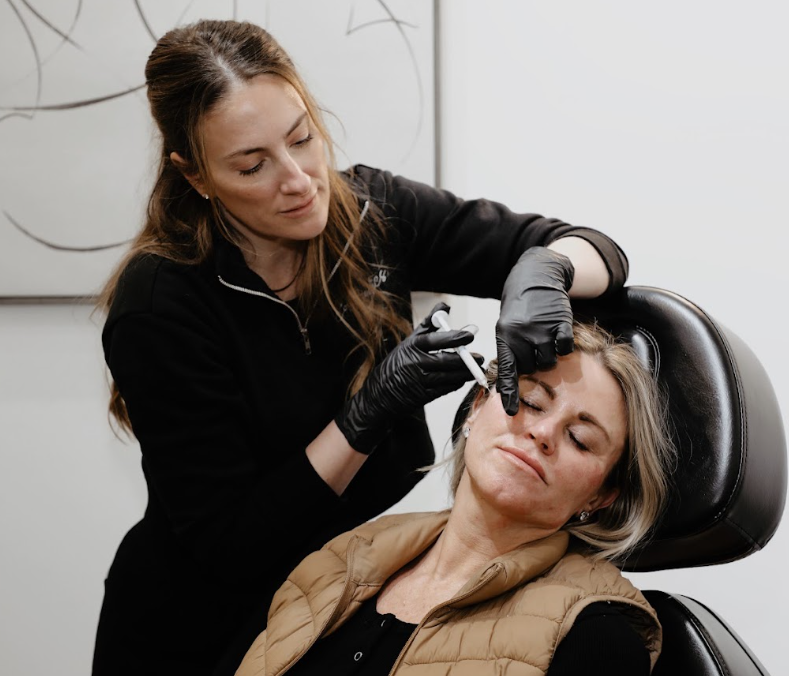
Patients considering injectable facial treatment are often introduced to dermal fillers and biostimulators as if the two belong to one interchangeable class of products. They do not. Hyaluronic acid dermal fillers restore facial volume by adding material that occupies space at the time of treatment. Biostimulators are used to encourage the body’s own collagen production so structure, firmness, and contour change gradually rather than all at once.
Volume restoration and collagen stimulation can serve related goals, but they operate through different mechanisms and follow different timelines. Change associated with many collagen-stimulating injectables develops over weeks and months. Immediate contour from a hyaluronic acid filler is visible at the appointment. Treating those approaches as the same category can create mismatched expectations about when results appear and how they should be evaluated.
“Dermal fillers and biostimulators are not the same class of treatment,” said Desirae Houbeck, Physician Assistant-Certified and Owner of CosMedics Medical Aesthetics Clinic. “Fillers add volume when they are placed. Biostimulators are used to stimulate collagen production, and the change in structure and firmness accumulates over time. That timeline has to be understood before a product is selected.”
The category is not a single product. CosMedics Medical Aesthetics Clinic lists Sculptra, Radiesse, PRF EZ Gel, and PRF, and each is described differently. Sculptra is presented as working deep beneath the skin to stimulate collagen production gradually and as a choice for restoring overall facial volume at the periphery of the face and temples, with results developing over several months and lasting up to two years. Radiesse is described as providing immediate volume and lift while also stimulating collagen production, with particular use for deeper wrinkles and smile lines. Those results are described as visible immediately and continuing to improve over several months.
PRF EZ Gel and PRF are autologous options rather than synthetic filler gels. PRF EZ Gel is processed from the patient’s own blood into a gel-like consistency rich in growth factors and is described as stimulating collagen and elastin production while adding subtle volume for tone, texture, and firmness without synthetic fillers. PRF uses the patient’s own platelets and fibrin matrix to trigger tissue repair and cellular renewal. It is described for improving skin texture, reducing fine lines, and supporting under-eye and overall facial rejuvenation as a biocompatible method for restoring radiance and firmness over time. The four options share a regenerative framing, but they are not interchangeable in composition, onset, or intended use.
“Sculptra, Radiesse, PRF, and PRF EZ Gel are not interchangeable,” said Habib Akrawi, Medical Doctor and Owner. “One option may be considered for volume at the periphery of the face and the temples, another for deeper wrinkles and smile lines, and an autologous option for texture, firmness, or under-eye concerns. The product has to match the pattern of volume change and the quality of the skin being treated.”
Restylane and RHA remain a separate reference point as the hyaluronic acid fillers listed by the clinic. They are described as adding volume, lift, and smoothness, with results typically visible immediately and fuller settling over a few days, lasting six to 18 months depending on the product and the patient’s metabolism. That immediate occupancy of space is what most clearly separates conventional fillers from treatments whose principal action is collagen stimulation. Radiesse occupies a middle position in the clinic’s descriptions because it supplies immediate volume and lift and also stimulates collagen, yet it is still grouped with the collagen-stimulating injectables rather than with Restylane and RHA.
Candidacy is not uniform. Treatment area, the presence of deeper wrinkles versus generalized volume loss, interest in an autologous material, and tolerance for a delayed timeline all affect whether a filler, a collagen-stimulating injectable, or neither is appropriate. These treatments are not presented as a replacement for dermal fillers, and no single product is described as suitable for every facial concern.
“Patients sometimes expect the same immediate contour they associate with hyaluronic acid fillers,” said Hannah Welch, Physician Assistant-Certified. “With many biostimulators, early change can be modest, and fuller effects develop over several months. Clinical judgment is needed so the expected course matches the mechanism of the product that is being used.”
CosMedics Medical Aesthetics Clinic is a PA- and MD-owned medical aesthetic clinic owned by Desirae Houbeck, Physician Assistant-Certified, and Habib Akrawi, Medical Doctor. Hannah Welch, Physician Assistant-Certified, is among the clinic’s providers. The practice offers non-surgical aesthetic care, including dermal fillers and biostimulators, at locations in Lake Orion, Grand Blanc, and Fenton. In accordance with Michigan law, Botox, dermal fillers, and other injectable services are performed under the supervision or direction of a licensed physician.
###
For more information about CosMedics Medical Aesthetics Clinic, contact the company here:
CosMedics – Grand Blanc
Desirae Houbeck
810-618-3367
CosMedicsmi@gmail.com
11522 S Saginaw St, Grand Blanc, MI 48439, United States
